 |
Michelangelo Bust Rediscovered in Rome After Centuries in Obscurity
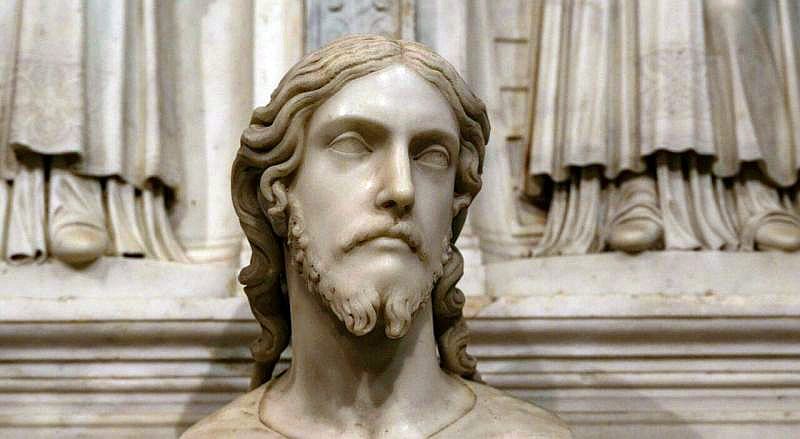
A remarkable discovery in Rome has brought renewed attention to the legacy of the Renaissance master Michelangelo Buonarroti. A marble bust depicting Christ the Saviour, located in the historic Basilica of Sant’Agnese fuori le Mura, has recently been reattributed to the famous artist after centuries of being overlooked.
The announcement was made in March 2026 following extensive historical investigation and scientific analysis. For generations the sculpture had been considered either anonymous or simply a high-quality copy created by one of Michelangelo’s followers. However, new research now suggests that the work may indeed have been carved by the master himself.
Decade of Research Reveals Hidden History
The discovery is the result of more than ten years of research conducted by independent historian Valentina Salerno. Her work involved examining historical documents such as wills, private diaries, and detailed inventories dating back to 1564, the year of Michelangelo’s death.
These documents challenged the long-standing belief that Michelangelo destroyed many of his final sketches and sculptures before his death. According to Salerno’s findings, the artist may instead have taken deliberate steps to protect some of his works by entrusting them to a small group of trusted associates.
This research helped establish a possible chain of ownership that ultimately connects the marble bust in the Roman basilica to Michelangelo’s circle.
A Sculpture Hidden in Plain Sight
The bust has stood quietly for centuries inside the Basilica of Sant’Agnese fuori le Mura, located along Via Nomentana in northern Rome. Although admired by visitors, it was never widely studied and was generally regarded as a later copy inspired by Michelangelo’s style.
Art historians examining the sculpture more closely noticed several features characteristic of the master’s later work. The piece displays remarkable anatomical precision and a deeply emotional expression, elements that are typical of Michelangelo’s mature devotional style.
Scholars also highlighted the powerful yet serene expression of Christ’s face, describing it as possessing the spiritual intensity often associated with Michelangelo’s religious works.
Supporting Evidence from a Drawing
Further evidence supporting the new attribution emerged when a Michelangelo drawing was sold at Christie’s in London in early 2026. The drawing’s documented provenance appears to align closely with the historical trail uncovered by Salerno during her research.
This connection has strengthened the argument that the sculpture and the drawing may belong to the same group of late works produced by Michelangelo during the final years of his life.
International Committee of Experts
To evaluate the findings, an international scientific committee was assembled, consisting of leading Michelangelo specialists and art historians. The project was conducted in collaboration with the Ordine dei Canonici Regolari Lateranensi del Santissimo Salvatore, the religious order responsible for the basilica.
After reviewing the historical documentation, stylistic comparisons, and technical analysis, the committee acknowledged that the sculpture shows several distinctive characteristics of Michelangelo’s late artistic period.
Experts particularly noted the exceptional formal quality of the marble carving and the almost “divine” expression of the face, both of which strongly resemble the spiritual intensity found in Michelangelo’s final works.
A Possible New Masterpiece of the Renaissance
If the attribution continues to gain acceptance among scholars, the bust of Christ the Saviour could become one of the most important rediscoveries related to Michelangelo in recent decades. The possibility that a previously overlooked sculpture may actually be the work of the Renaissance master is generating considerable excitement in the art world.
The discovery also highlights how many historical treasures remain hidden in churches and collections throughout Italy. Rome, with its thousands of years of artistic heritage, still holds countless works that continue to be studied and reinterpreted by historians.
For visitors to Rome, the Basilica of Sant’Agnese fuori le Mura now represents not only an important early Christian site but also a possible home to a newly recognized masterpiece by one of the greatest artists in history.