Turin – The First Capital of Unified Italy
When people think of the capital of Italy, almost everyone immediately thinks of Rome. Yet the story of modern Italy has another beginning. Before Rome became the political heart of the country, Italy had two earlier capitals: Turin and Florence.
The first was Turin, or Torino in Italian. From 1861 to 1865, this elegant Piedmontese city was the capital of the newly created Kingdom of Italy and the political center of a country that had only just emerged from centuries of division.
The journey from Turin to Florence and finally to Rome is more than a story about changing government offices. It is a fascinating reflection of the Risorgimento itself: a gradual movement toward the creation of a united Italian nation.
Turin – The First Capital of Unified Italy
On 17 March 1861, the Kingdom of Italy was officially proclaimed, with Victor Emmanuel II becoming King of Italy. Turin became the capital of the new kingdom. The first Italian Parliament had already met in Turin in February 1861.
The choice was not surprising. Turin had been the capital of the Kingdom of Sardinia and was the seat of the House of Savoy, the dynasty whose political leadership played a central role in Italian unification.
The city therefore became the place where the new Italian state began its institutional life. Government ministries, Parliament and the royal court were concentrated in Turin as the new kingdom attempted to transform a collection of previously separate states into one country.
For four extraordinary years, Turin was not simply a city in Piedmont. It was the capital of Italy.
The Risorgimento and the Birth of Italy
Before unification, the Italian peninsula was divided into numerous kingdoms, duchies, grand duchies and territories. The north included states influenced or controlled by Austria, while the Kingdom of Sardinia was centered on Piedmont. The Papal States occupied much of central Italy, and the Bourbon Kingdom of the Two Sicilies controlled the south.
During the nineteenth century, a growing movement known as the Risorgimento sought political unity and independence.
Figures such as Giuseppe Mazzini, Giuseppe Garibaldi, Count Camillo di Cavour and Victor Emmanuel II became associated with different aspects of this remarkable national movement.
The process was complicated, involving diplomacy, wars, popular movements, political negotiations and military campaigns. The Kingdom of Sardinia gradually expanded its influence, and in 1860 Garibaldi's Expedition of the Thousand conquered Sicily and helped bring the Kingdom of the Two Sicilies into the emerging Italian state.
By 1861, enough territory had been brought together for the Kingdom of Italy to be proclaimed, although Venetia and Rome were still outside the new kingdom.
Chronological History of Italy's Three Capitals
| Year | Event | Capital |
|---|---|---|
| 1815 | The Congress of Vienna restores and reorganizes the Italian states after the Napoleonic era. | Italy remains divided |
| 1848 | Revolutions and constitutional movements spread across Europe and Italy. | — |
| 1859 | The Second Italian War of Independence changes the political balance in northern Italy. | Turin |
| 1860 | Garibaldi's Expedition of the Thousand conquers Sicily and southern territories. | Turin |
| 17 March 1861 | The Kingdom of Italy is proclaimed. | Turin |
| 1861–1865 | Turin serves as the first capital of unified Italy. | Turin |
| 1864 | The September Convention leads to the decision to transfer the capital from Turin. | Turin |
| 1865 | The national government and royal court move to Florence. | Florence |
| 1866 | Venetia becomes part of the Kingdom of Italy after the Austro-Prussian War. | Florence |
| 20 September 1870 | Italian forces enter Rome through the breach at Porta Pia. | Florence |
| 1870–1871 | Rome is incorporated into the Kingdom of Italy. | Florence |
| 1871 | Rome becomes the capital of the Kingdom of Italy. | Rome |
The sequence of capitals is therefore remarkably simple: Turin → Florence → Rome. Treccani describes these as the three capitals of the first decade of the new Italian state. Turin served from 1861 to 1865, Florence from 1865 to 1871, and Rome thereafter.
Why Did Italy Move Its Capital from Turin?
The decision to move the capital was closely connected with Italy's diplomatic relationship with France and the unresolved question of Rome.
In 1864, the September Convention between Italy and France provided for the withdrawal of French troops from the Papal States and was connected with the transfer of the Italian capital from Turin. Parliament approved the move, and Florence became the capital in 1865.
The decision was deeply unpopular in Turin. Demonstrations and violence accompanied the transition, showing how emotionally important the capital had become to the people of the city.
For Turin, losing the capital meant losing government offices, politicians, officials and many people whose livelihoods depended on the presence of the national administration.
But history had already begun moving south.
Florence – Italy's Second Capital
In 1865, the capital moved to Florence, a city whose historical and cultural importance was already enormous.
For six years, Florence became the political center of the Kingdom of Italy. Parliament, government institutions and the royal court established themselves in the city. The transfer also triggered major urban changes as Florence attempted to adapt to its new role as a national capital.
Palazzo Vecchio became associated with the new political administration, while other institutions were accommodated in historic buildings. The transformation was not always gentle; the needs of the modern capital sometimes collided with Florence's medieval and Renaissance heritage.
Yet Florence's time as capital was always understood by many as a transitional chapter. The ultimate destination of the Italian national project was Rome.
Rome – The Capital Italy Had Been Waiting For
Rome remained outside the Kingdom of Italy while it was protected by French troops and ruled by Pope Pius IX. For the Italian national movement, however, Rome had immense symbolic importance.
Everything changed in 1870. Following the collapse of Napoleon III's regime in France and the withdrawal of the French garrison, Italian forces entered Rome on 20 September 1870.
Rome subsequently became part of the Kingdom of Italy, and in 1871 the capital was formally transferred from Florence to Rome.
At last, the new Italian state had its historic and permanent capital.
A Nostalgic Journey Through Italy's Three Capitals
There is something deeply nostalgic about imagining Italy between 1861 and 1871.
Imagine Turin in the early 1860s.
The new Italian flag hangs from buildings that only recently belonged to the Kingdom of Sardinia. Deputies arrive from different parts of the peninsula. The Parliament meets, ministers debate the future and a new word—Italy—is becoming more than a geographical expression.
Turin was the young country's first home.
Then came Florence.
For a few years, the Renaissance city carried the responsibilities of a modern European capital. The Arno flowed beneath its bridges while ministers, diplomats, parliamentarians and officials crowded into the historic city.
And then came Rome.
The Eternal City had waited centuries for this moment. Ancient ruins, Renaissance palaces, churches and the Vatican now stood alongside the institutions of the modern Italian state. The story that had begun in Turin finally reached the city that had occupied such a powerful place in Italy's imagination.
Turin, Florence and Rome.
Three cities. Three personalities. Three chapters in the birth of modern Italy.
Perhaps that is what makes this history so moving. The capitals did not simply change because a government decided to move offices. Each city represents a different stage of the country's journey.
Turin represents the beginning.
It was the city of the House of Savoy and the first political home of unified Italy.
Florence represents transition.
The Renaissance city became the bridge between the northern kingdom that had initiated unification and the Rome that would complete it.
Rome represents arrival.
When Rome became the capital, the geographical and emotional idea of Italy finally seemed complete.
For anyone interested in Italian history, walking through these three cities today can feel like following the footsteps of the Risorgimento itself.
What Remains of Turin's Capital Years?
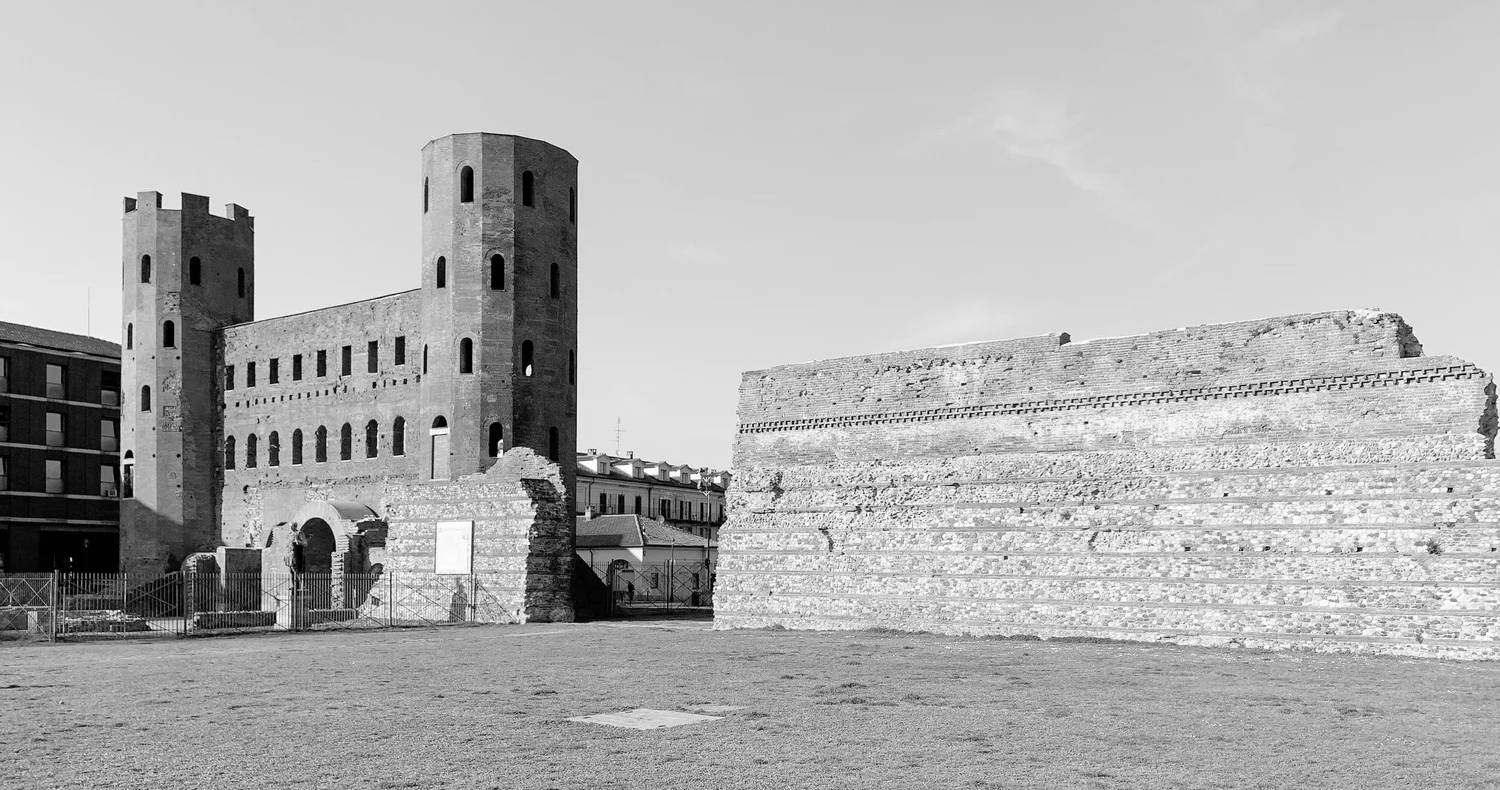
Turin retains a remarkable collection of buildings and places associated with the House of Savoy and the nineteenth-century political world that preceded and accompanied unification.
Visitors can explore the historic center, Piazza Castello, Palazzo Madama, the Royal Palace, the former parliamentary buildings and other locations connected with the Savoy monarchy.
The city that later became famous for industry, automobiles, chocolate and design still carries the atmosphere of the city that once stood at the beginning of modern Italy.
For travelers interested in the Risorgimento, Turin offers a different historical experience from Rome or Florence. It is the place where the national story began politically.
Why Visit Turin Today?
Turin is sometimes overlooked by visitors who concentrate on Rome, Florence and Venice. That is a shame for anyone interested in Italian history.
The city combines royal residences, elegant nineteenth-century avenues, historic cafés, museums, the Egyptian Museum, Savoy architecture and a distinctive Piedmontese culture.
It is also an excellent gateway to the landscapes and wine country of Piedmont, including the Langhe and the famous towns of Alba and Asti.
A visit to Turin therefore offers two stories at once: the story of the ancient House of Savoy and the story of the birth of modern Italy.
Frequently Asked Questions
What was the first capital of unified Italy?
Turin was the first capital of the Kingdom of Italy after unification in 1861. It remained the capital until 1865.
Why was Turin chosen as the first capital of Italy?
Turin had been the capital of the Kingdom of Sardinia and the political center of the House of Savoy. Since the Savoy monarchy led the political process that created the Kingdom of Italy, Turin naturally became the first capital.
When did Italy's capital move from Turin to Florence?
The capital moved to Florence in 1865. The decision was linked to the September Convention of 1864 and Italy's diplomatic relationship with France and the Papal States.
How long was Florence the capital of Italy?
Florence was the capital from 1865 until 1871. It was the second capital of the newly unified Kingdom of Italy.
When did Rome become the capital of Italy?
Rome became the capital in 1871, following its capture by Italian forces in 1870 and incorporation into the Kingdom of Italy.
How many capitals has Italy had since unification?
There have been three official capitals of the unified Kingdom of Italy: Turin, Florence and Rome. Turin served from 1861–1865, Florence from 1865–1871 and Rome from 1871 onward.
Was Rome always the capital of Italy?
No. Rome became the capital only after unification was substantially completed. Turin was the first capital and Florence the second.
Why is Turin important in Italian history?
Turin was the political birthplace of the unified Italian kingdom. It was the capital, the seat of the first national government and the place where the institutions of the new Kingdom of Italy began their national life.
The Three Capitals of Italy in One Journey
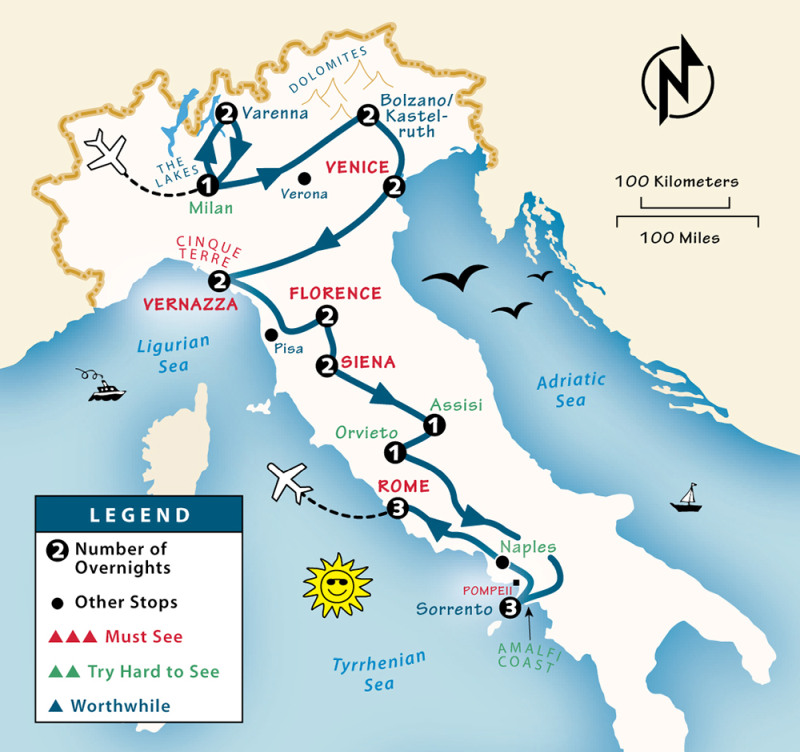
Today, travelers can follow the story of Italian unification by visiting all three capitals. Start in Turin, where the new kingdom began; continue to Florence, where Italy briefly established its national government; and finish in Rome, the capital that became the permanent political heart of the country.
It is a journey through palaces, squares, museums, parliamentary buildings, monuments and streets that witnessed one of Europe's most fascinating national transformations.
And perhaps the most beautiful part is that these cities remain connected not only by history, but also by Italy's excellent modern rail network.
Discover Italy's History with Exotic Italy Tours
For travelers who want to experience Italy beyond the usual tourist attractions, the history of the country's three capitals offers a fascinating theme for a cultural journey.
From the royal heritage of Turin and the Renaissance treasures of Florence to the ancient and monumental world of Rome, each city tells a different chapter of Italy's extraordinary story.